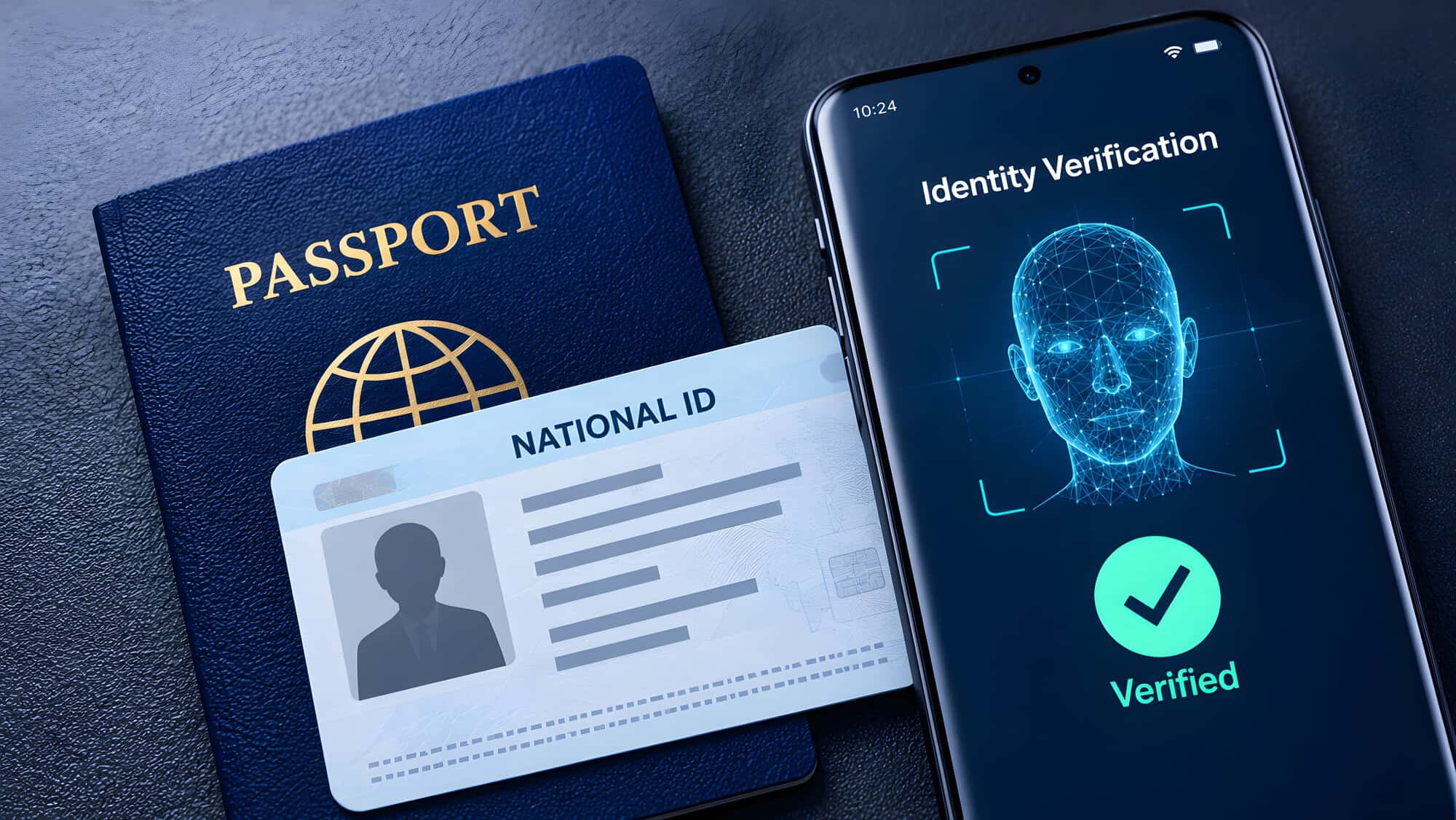
Here’s what to check first.
The two things every recipient needs
What do you need to pick up a MoneyGram money transfer? For an eligible cash pickup, start with:
- The MoneyGram reference number. The sender receives this when the transfer is completed and needs to share it with the recipient.
- An accepted government-issued photo ID. The recipient will use this to verify their identity when collecting the money.
Both are there for a reason. Cash transfers are sent to a specific person, and the agent needs to confirm that the person collecting the money is the person it was sent to.
Before the recipient leaves, check the reference number and make sure the name on the transfer matches their ID.
Which ID documents are accepted?
There isn’t one ID list that applies everywhere MoneyGram operates.
The documents a recipient can use depend on the country where they’re collecting the transfer and the requirements that apply there. That means an ID accepted in one country may not necessarily be accepted somewhere else.
| Document type |
Is it accepted? |
Conditions |
| Passport |
Yes |
Must be valid. |
| National identity card |
Yes |
Must be valid. |
| Driver’s license |
Yes |
Not acceptable in every country. |
| Residence permit |
Yes |
Must be valid. |
| Other government-issued photo ID |
Sometimes |
Please see list of accepted IDs. |
Do not only bring something with your name and photo on it. Make sure the document meets the requirements for the country and transaction.
If you’re unsure, check the requirements before going to find a MoneyGram location. It’s much easier to confirm the right document at home than find out you brought the wrong one at the counter.
ID requirements by country
ID requirements can change from one country to another, so don’t assume the document your recipient used somewhere else will work for their next cash pickup.
The table below should give recipients one place to check the requirements for MoneyGram’s key receiving markets.
| Country |
Accepted identification |
Important requirements |
| Mexico |
- Government-issued ID
- Passport
- Voter Registration Card
- Professional License
- Military Service Card
- National Institute of Senior Citizens Affiliation Card
- Driver’s license
|
|
| India |
- Passport
- PAN card (permanent account number)
- Proof of AADHAR
- Voter’s identity card
- Driving license
- Job card issued by NREGA
- Identity card (subject to agent’s satisfaction)
|
|
| Philippines |
- PhilSys ID/National ID
- Passport
- Driver’s license
- National Bureau of Investigation (NBI) Clearance
- Police Clearance
- Postal ID
- Voter’s ID card/affidavit
- Barangay Certification
- Government Service Insurance System (GSIS) e-Card
- Social Security System (SSS) Card
- Senior Citizen Card
- Overseas Workers Welfare Administration (OWWA) ID
- OFW ID
- Seaman’s Book
- Alien Certification of Registration/Immigrant Certificate of Registration
- Government Office and GOCC ID, e.g. Armed Forces of the Philippines (AFP) ID, Home Development Mutual Fund (HDMF) ID
- Certification from the National Council for the Welfare of Disabled Persons (NCWDP)
- Department of Social Welfare and Development (DSWD) Certification
- Integrated bar of Philippines ID
- Company ID issued by private entities/institutions registered with, supervised and/or regulated by BSP, SEC or IC
- Professional Regulation Commission (PRC) ID
- Tax Identification Number
|
Filipino students: school ID signed by the school principal/head of educational institution |
| Nigeria |
- International passport
- National ID
- Driver’s license
- INEC Voter’s card
|
|
| Guatemala |
- Government-issued photo ID/Documento Personal de Identificacion (DPI)
- Passport
|
|
| Colombia |
- Cedula de ciudadania (national ID card)
- Passport with entry to the country for less than 90 days
- Tarjeta de Identidad (ID card for people under 18 years)
- Cedula de extranjería (foreign national ID card issued by Colombian government)
- Visa and diplomat visa
- ID of nationals from Ecuador, Peru and Bolivia (Andean Nations Community)
|
Venezuelan nationals: passport with entry to the country for more than 90 days or Venezuelan ID, but only with PEP (Permanency Special Permit). |
| Dominican Republic |
- Government photo ID
- Passport
- Resident card
|
|
| Honduras |
- Government photo ID
- Passport
- Residence card
- Documento Nacional de Identidad (DNI)
|
|
| El Salvador |
- Government photo ID
- Passport
- Residence card
- Documento Unico de Identidad (DUI; Salvadoran citizens)
|
Banco Agrícola additionally requires Cédula Carnet Electoral (government-issued personal ID) or driver’s license |
| Ghana |
- Residents: Ghana Card
- Non-residents (staying in the country for less than 90 days and receiving a one-off transaction): international passport
- Foreign diplomats/their dependents: international passport
- Resident foreigners: Non-Citizen Card
|
|
| Kenya |
- Passport
- Government-issued ID
|
|
| Jamaica |
- Government ID
- Student ID
- Taxpayer Registration Number
- Driver’s license
- Passport
|
|
| Pakistan |
- Nationals
- Passport
- Government-issued photo ID
- NADRA-issued ID
- Foreigners: passport with a valid visa
|
|
| Nepal |
- Passport
- Government-issued photo ID
|
|
| Brazil |
Foreigners (non-residents)
- Passport
- Government-issued photo ID
Brazilian residents and nationals
- Passport
- Government-issued photo ID
- RNE (Registro Nacional de Estrangeiros): similar to an alien ID
- CNH (Carteira Nacional de Habilitacao): driver’s license
- CPF number: similar to Social Security Card
|
|
| China |
- Government photo ID
- Non-residents only: passport
|
|
| Vietnam |
- Passport
- Government-issued photo ID
|
|
If your recipient is in one of MoneyGram’s largest receiving corridors, you can also find more information about collecting a transfer in Mexico, collecting a transfer in the Philippines and collecting a transfer in India.
The name has to match exactly
This is one of those details that seems small until it stops someone from collecting their money.
The recipient’s name on the transfer needs to match the identification they present according to the applicable requirements. And there are more ways for a name to be different than a simple typo.
For example, check for:
- Missing or additional middle names
- Maiden names or married names
- Multiple surnames
- Misspellings
- Accents
- Hyphens or other punctuation
- Differences caused by transliteration between languages
If the name on the transfer is wrong, the agent can’t simply change it at the counter. Only the sender can correct the recipient’s name.
So before sending the money, ask the recipient how their name appears on the ID they plan to use. Then enter it that way.
It takes a few extra seconds and can prevent a much bigger headache later.
What if the recipient has no government ID?
If the recipient doesn’t have an accepted form of identification, don’t try to find a way around the ID requirement.
Identity verification is part of protecting the transfer and making sure the money goes to the person it was sent to.
Depending on the country and the transfer, another payout method may be available before the money is sent. That could mean receiving money through a bank account or another supported method instead of collecting cash in person.
If ID could be a problem for your recipient, compare cash pickup, bank transfer or mobile wallet before choosing how to send the transfer.
There isn’t an ID-free workaround for a cash pickup when identification is required.
Recipients under 18
Can someone under 18 collect a MoneyGram transfer?
If you’re sending money to someone under 18, check the requirements before naming them as the recipient.
Don’t assume a parent or guardian can simply collect the transfer instead. Cash transfers are sent to a named recipient, and age and identification requirements may affect whether the money can be released.
Larger amounts may need more information
For some transfers, the standard identification used for a cash pickup may not be the end of the verification process.
A larger transaction or other circumstances may trigger additional verification requirements. That could mean the recipient is asked for more information or another form of documentation before the money can be released.
If you’re sending a larger amount, check the requirements ahead of time rather than assuming the normal pickup process will be exactly the same.
That can help the recipient arrive with everything they need the first time.
Do the rules change by payout method?
Yes. How someone receives money can change how their identity is verified.
With cash pickup transfer, the recipient is collecting money in person, so they need to meet the identification requirements for that transaction.
With a direct to bank transfer, the money is sent to an eligible account rather than handed over at a counter. Verification is tied to the account and other information required for the transfer.
A mobile wallet transfer may have its own account and identity-verification requirements.
A debit card transfer can also have its own requirements.
The right payout method depends on more than convenience. Before sending, consider what the recipient actually has access to and what they’ll need to receive the money.
For more information, see receiving money with MoneyGram.
Why we ask for identification
Asking someone to prove who they are before handing over money is an important step in the money transfer process.
Money transfers are subject to identification and verification requirements, and those requirements help make sure the money is released to the intended recipient.
It’s also one reason the name on the transfer matters so much. The information provided by the sender needs to line up with the person who arrives to collect it.
Knowing what to expect can make the process easier while helping protect both sides of the transfer.
You can also learn more about protecting yourself from scams before sending or receiving money.
Frequently asked questions
What ID do I need to pick up a money transfer?
For an eligible MoneyGram cash pickup, the recipient needs an accepted government-issued photo ID along with the transfer reference number.
Exactly which identification documents are accepted depends on the country where the money is being collected.
What do I need to pick up a MoneyGram money transfer?
You need the MoneyGram reference number from the sender and an accepted government-issued photo ID. The name on the transfer also needs to match the recipient’s identification according to the applicable requirements.
Additional verification may be required depending on the country or transaction.
Can I pick up a MoneyGram transfer with an expired ID?
Do not assume an expired document will be accepted just because it still shows the recipient’s name and photo. Check the current requirements before going to collect the transfer.
Can I use a photocopy of my ID?
Bring the identification required for the transaction rather than relying on a copy unless MoneyGram’s requirements specifically say it is accepted.
Can I show a digital ID on my phone?
Digital identification is becoming more common, but whether it can be used for a MoneyGram cash pickup depends on the applicable requirements.
What if my ID is in a different name after marriage?
If the name on the transfer doesn’t match the identification you plan to use, the difference may prevent collection.
The sender may need to correct the recipient’s name before the money can be released. Contact MoneyGram customer service if you have questions.
Can I collect a MoneyGram transfer for someone else?
No. MoneyGram transfers are sent to a named recipient, and identification is part of the cash pickup process.
Do not assume that having the recipient’s ID or reference number allows another person to collect the money.
Can I collect a MoneyGram money transfer without ID?
If identification is required for the cash pickup, it cannot simply be waived because the recipient doesn’t have an accepted document.
If the transfer has not been sent yet, check whether another supported payout method may work better for the recipient.
Do I need ID if the money is going to my bank account?
Bank transfer works differently from an in-person cash pickup because the money is sent to an eligible account rather than handed to the recipient at a counter.
Why does MoneyGram need my ID?
Identification helps MoneyGram and its agents verify that the person collecting an eligible cash transfer is the intended recipient and meet applicable regulatory requirements.
The exact requirements can vary by country and transaction, which is why it’s worth checking what you need before going to a location.