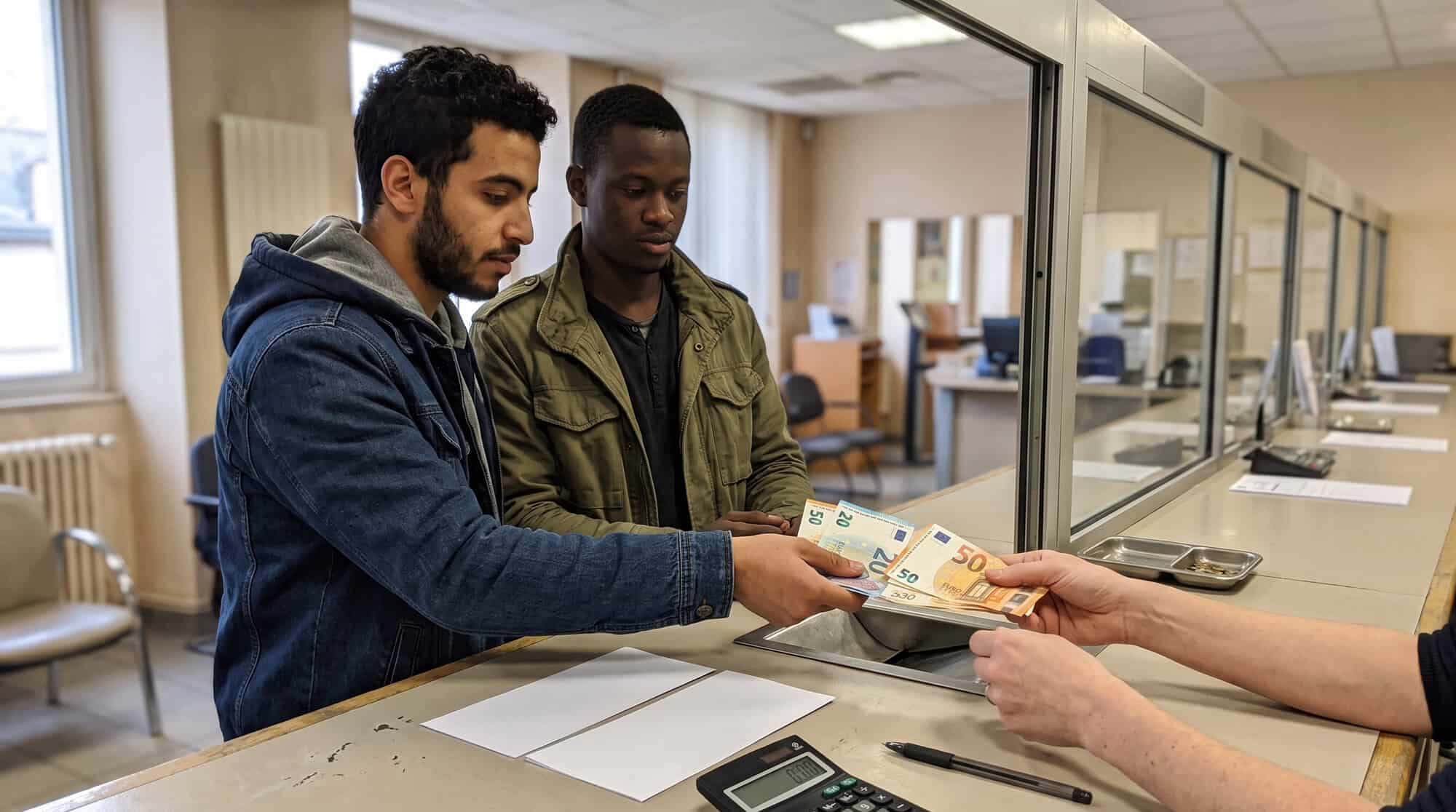
Cash Pickup vs Bank transfer in Europe
Compare cash pickup and bank transfer in Europe, including access, timing, cost, and what your recipient needs to receive money.
If you’re sending money to someone in Europe, bank transfer is usually the place to start.
Bank accounts are widely used across Europe, and many countries are connected through SEPA, the Single Euro Payments Area. That makes sending money directly to an eligible recipient account a natural choice for many transfers.
Cash pickup still has a place, especially for someone without a bank account or someone who simply needs cash. But it’s a smaller part of the picture here than it is in many other parts of the world.
So if you’re comparing cash pickup vs bank transfer in Europe, don’t start by asking which option sounds best. Start with what your recipient actually uses.
The main choice for many transfers to Europe is between sending money directly to an eligible bank account and having the recipient collect cash.
Europe is a big region, and the right answer can change by country. A recipient in Spain may have different options from someone in Poland or Ukraine.
So think of this as the starting point. The actual payout methods available for your transfer are what matter.
Cash pickup is still useful for some recipients in Europe.
Someone without an eligible bank account may prefer to collect physical cash. The same can be true for someone who uses cash for most everyday spending or simply wants the money in hand.
For an eligible cash pickup, the recipient visits a participating MoneyGram location, provides the transfer reference number and presents the required identification.
The tradeoff is the trip. Your recipient needs to get to a participating location during its opening hours. Depending on where they live, that could be easy or it could turn receiving the money into an errand.
Cash availability may also vary by location and transaction amount. Before choosing cash, check whether there’s a practical pickup option near the recipient and what ID your recipient needs to collect the transfer.
Cash can be useful when it solves an access problem. If your recipient already has and regularly uses an eligible bank account, though, adding a trip to collect money may create a problem that wasn’t there to begin with.
For many recipients in Europe, bank transfer is the more natural option.
Instead of going somewhere to collect cash, an eligible transfer goes directly to the recipient’s bank account.
That can be especially useful when the money is going toward expenses the recipient already pays from that account, like rent, utilities or everyday purchases.
There’s no separate cash pickup and no need to deposit the money afterward.
The sender does need the right banking information. Double-check those details before sending. A bank transfer is convenient when the information is right. A wrong digit can make it much less convenient. Coverage also varies by country.
For someone who already manages most of their money through a bank, direct to bank often fits into their life without asking them to do anything differently.
If you’re sending from the US, some of the banking terms your recipient uses may be unfamiliar.
One of the biggest is SEPA, or the Single Euro Payments Area.
SEPA is a European payment framework designed to make euro-denominated bank transfers work more consistently across participating countries. It’s one reason sending money to an eligible European bank account can look different from making a domestic bank transfer in the US.
You may also hear your recipient talk about an IBAN, or International Bank Account Number. An IBAN is used to identify bank accounts in many European countries.
That doesn’t mean sending a MoneyGram transfer is the same thing as arranging a traditional bank wire yourself.
MoneyGram handles the transfer through the payout options available for the transaction. As the sender, your job is to provide the recipient and banking information requested when you set it up.
The practical takeaway is simpler than the banking terminology: ask your recipient for their correct account information rather than trying to convert US banking details into a European format yourself.
The fastest option depends on the country and the individual transfer.
Bank transfer timing can depend on when the transfer is sent, the receiving institution, local banking hours, weekends, and holidays.
Cash pickup has different considerations. Even if a transfer is ready to collect, your recipient still needs to reach a participating location while it’s open.
If speed matters, compare the estimated timing shown for the actual transfer before choosing. Don’t assume cash is faster because it’s cash. And don’t assume bank transfer is slower because a bank is involved. Use the current information for the route you’re sending.
There isn’t one answer that applies to every European transfer.
The cost can depend on the amount you send, how you pay, where the recipient lives and how they receive the money.
Currency matters too. Some recipients may receive euros, while others are in European countries that use a different currency. The exchange rate used for the transaction can affect how much arrives on the other side.
That’s why comparing only the transfer fee can give you an incomplete picture.
Instead, check the current rate and fee for the transfer and look at the amount your recipient is expected to receive.
Current transaction details are more useful than a fee figure that may be outdated the next time someone reads this page.
If your recipient doesn’t have an eligible bank account, cash pickup may be the most practical option where it’s supported.
The recipient will need to meet the identification requirements and travel to a participating MoneyGram location to collect an eligible transfer.
Depending on the country, other payout methods may also be available.
The important thing is not to assume that everyone in Europe has the same access to banking just because bank transfer is common across the region.
If your recipient doesn’t have an account, start there. Find the option they can actually use, then compare timing and cost.
Europe covers a lot of countries and a lot of different banking habits. The easiest option in one situation can be completely wrong in another.
Bank transfer is probably the first option to consider.
If the recipient already pays bills, shops and manages everyday expenses through an eligible account, sending money there removes an extra step.
There’s no reason to create a cash pickup errand if the money is ultimately going into their bank account anyway.
Cash pickup may make sense if it’s available nearby and the transfer is eligible.
Before choosing it, check the location, opening hours, identification requirements and applicable payout limits.
Convenience adds up when you do something every month.
If the recipient has an eligible account they regularly use, bank transfer may be easier than repeatedly traveling to collect cash.
That doesn’t mean it’s automatically right for everyone. The point is to make the transfer fit the recipient’s normal routine instead of adding another task to it.
Check actual access. A cash pickup location that looks reasonably close on a map may still be inconvenient without a car or reliable public transportation.
If the recipient has an eligible bank account, direct to bank may save them the trip.
Check the payout limits before choosing cash. A location may have restrictions on how much it can pay out, and additional verification requirements may apply depending on the country and transaction.
Bank transfer may be more practical depending on the amount and destination.
Having a bank account and being comfortable managing money digitally aren’t necessarily the same thing.
Ask what your recipient prefers. They may still find a bank transfer simple because the money arrives in an account they know. Or cash pickup may feel more familiar.
The best payout option is the one that removes work for the recipient, not the one with the most technology behind it.
For many recipients in Europe, bank transfer is the more natural starting point because bank transfers are widely used across the region.
Cash pickup may make more sense for someone without an eligible bank account or someone who specifically needs cash.
The right option depends on the country, recipient access, timing and current transaction cost.
Bank transfer is available for eligible MoneyGram transfers in supported European markets.
You’ll need to provide the recipient and banking details requested when setting up the transfer.
The information required depends on the destination country and receiving bank. That may include an IBAN or other account information.
Ask your recipient for the account information exactly as their bank provides it.
No. A MoneyGram transfer sent to a bank account uses MoneyGram’s transfer service and the payout route available for that transaction. A traditional international bank wire is a different way of moving money between financial institutions.
Cash pickup may be available in supported European markets. The recipient will need to meet the applicable identification requirements and visit a participating location.
Mobile wallet payout is not equally relevant across European markets.
Check the payout methods available for the specific transfer rather than assuming a wallet is supported.
The payout method is selected when the transfer is set up.
If the selected method no longer works for the recipient, contact MoneyGram for the available next steps.
Start with how your recipient already manages money.
If they regularly use an eligible bank account, bank transfer may be the simplest choice. If they don’t have one or need physical cash, look at cash pickup availability.
Then compare current timing, cost and requirements for the specific country and transfer.
For more general information about the different ways to receive money, see receiving money with MoneyGram.