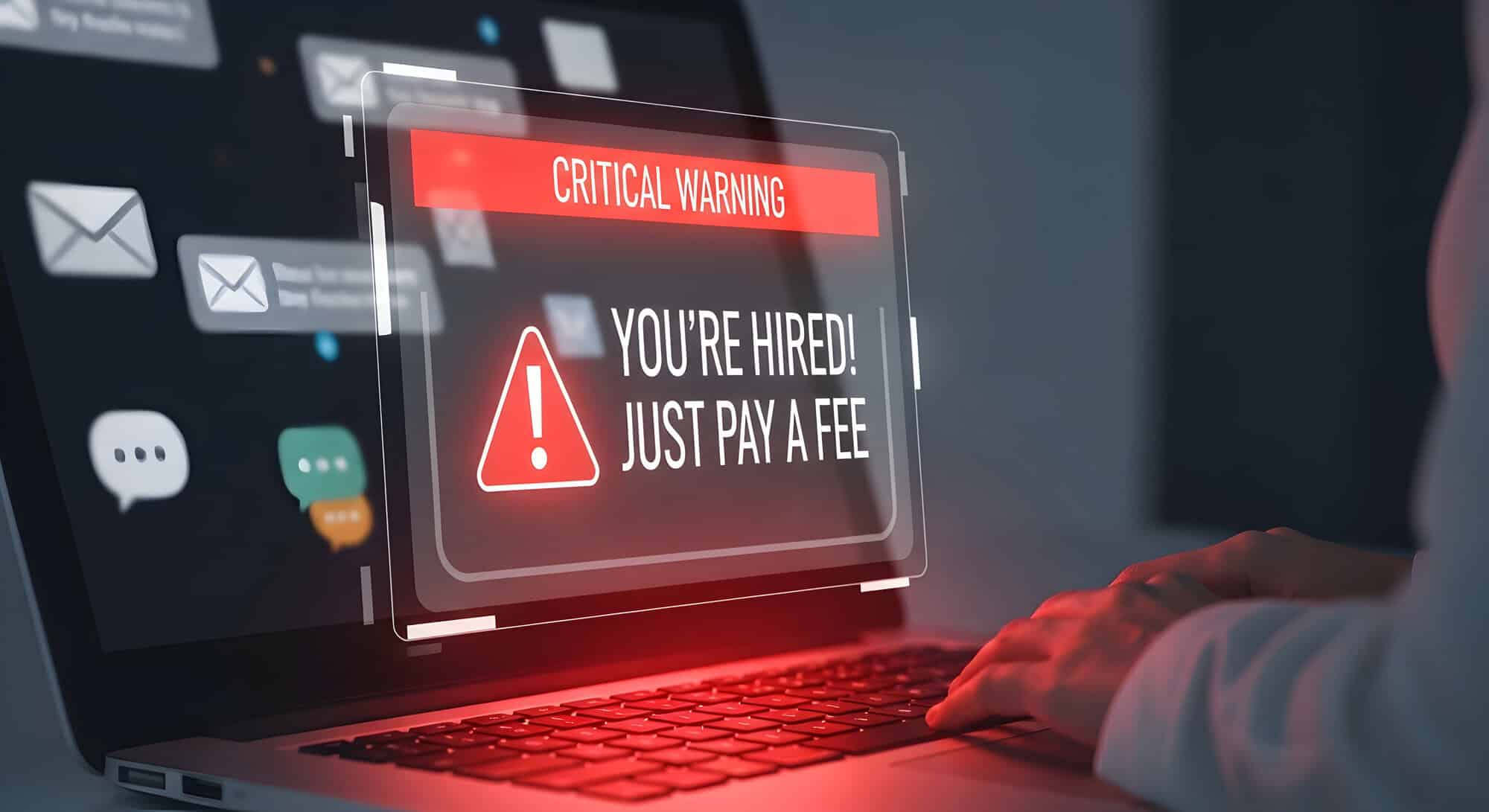
If you've received an offer that doesn't feel right, don't send money or deposit a check yet. Take some time to verify the company, the recruiter and the job itself.
The fastest test
A legitimate employer should not ask you to pay to be hired. You also shouldn't be sent money with instructions to forward some of it somewhere else.
If either is happening, stop before sending money, depositing a check, or sharing more financial information.
Don't let a recruiter rush you because a position supposedly needs to be filled today. A legitimate offer can wait while you verify who you're dealing with.
What an employment scam is
An employment scam is a fake job opportunity designed to get money, personal information, or access to someone's financial accounts.
Sometimes the goal is straightforward: you're told you need to pay for training, equipment, a certification or a background check before you can start.
Other job scams work differently. The supposed employer sends you money and asks you to use your personal account to buy equipment, pay a vendor, or forward funds somewhere else.
The job isn't real. It's simply the reason given for the financial request.
The FBI Internet Crime Compliant Center reported nearly 25,000 employment related complaints in 2025.
How the offer reaches you
A fake job offer can appear in many of the same places as a real one.
You might receive an unexpected message on a professional networking site. A recruiter might text you or contact you through WhatsApp and say they found your resume online.
The job itself may even appear on a legitimate job board.
That doesn't automatically make the offer real.
Scammers can copy real job postings, impersonate legitimate companies, and create profiles that look like they belong to actual recruiters. A fake recruiter may use the name of a real employee or company while contacting you from an unrelated email address.
Look closely at where the conversation is happening.
If someone says they work for a company but contacts you from a personal or slightly altered email domain, verify them independently.
And don't use the links or phone numbers in the recruiter's message to do it. Find the company's official website yourself.
The job scams that come up most often
The details vary, but some types of fake work appear repeatedly.
Work-from-home jobs
Remote work itself isn't a warning sign.
The problem is an offer that uses remote work to explain why you've never spoken to anyone face-to-face, why the interview happens entirely through messages, or why company money needs to pass through your personal account.
A work-from-home scam may advertise simple administrative or data-entry work with unusually high pay and very few requirements.
Mystery or secret shopper jobs
You're hired to evaluate a store, service, or payment experience and are sent money to complete your first assignment.
The instructions may require you to deposit a check, make purchases, or send money somewhere else.
This can overlap with fake check and overpayment scams, where the original payment is later found to be fraudulent.
Equipment purchases
A supposed employer sends a check so you can buy a laptop, software, or other equipment for your new role.
You're told to deposit it and purchase everything through a particular vendor.
If the original check is fraudulent, the money you spend on the supposed equipment is still real.
Package reshipping
The job involves receiving packages at your home, repackaging them, and sending them somewhere else.
Before accepting work like this, independently verify the employer and what you're actually being asked to handle.
Personal assistant or invoice-paying jobs
A supposed employer hires you to handle errands, bills, or vendor payments.
The work quickly starts involving checks, transfers, or requests to use your own bank account for company business.
A real employer should not need a brand-new employee's personal account to move company money.
Jobs that require an upfront fee
You may be told you need to pay for training, certification, software, or a background check before the company can hire you.
Some legitimate careers do have costs associated with qualifications. That is different from an unfamiliar recruiter requiring you to send money directly to them or a vendor they choose before you can begin.
If payment is suddenly part of getting the job, stop and verify the company and requirement independently.
When the employer sends you money first
Receiving money can make an offer feel more legitimate, but this can also be part of the scam.
A supposed employer may send you a check and tell you to use the money to buy equipment. Or you may be asked to pay a vendor, purchase supplies, or send the remaining balance somewhere else.
The money may even appear in your account after you deposit the check.
That doesn't necessarily mean the check is good.
In a fake check and overpayment scam, funds may become available before a fraudulent check is discovered. If the deposit is later reversed, any money you've already sent elsewhere may still be gone.
There is another reason to take a request to move money seriously.
If someone you've never met asks you to receive and forward money through your personal account as part of a job, stop. Don't continue moving funds while you try to figure out whether the employer is legitimate.
The term money mule is sometimes used for someone whose account is used to receive and move funds connected to fraud. But simply applying that label doesn't tell you someone's legal position, especially when they were deceived by a fake employer.
If you've already moved money for a supposed employer and are concerned about what happened, contact your financial institution, and seek independent advice.
Warning signs of a fake job offer
A job offer deserves a closer look if:
- You receive an offer for a job you never applied for.
- You're hired without a real interview.
- The entire interview takes place by text or a messaging app.
- The recruiter uses a personal email address or a domain that doesn't match the company.
- The pay is unusually high for the role or experience required.
- You're pressured to accept or start immediately.
- You're asked for bank information before normal hiring paperwork is completed.
- You have to pay a fee before you can start.
- You're told to pay for training or equipment through a specific person or vendor.
- A check arrives before your first day.
- You're asked to deposit a check and send some of the money elsewhere.
- You're asked to use your personal bank account for company payments.
- The recruiter avoids phone or video conversations.
- The job isn't listed on the company's own careers site.
- The job description is vague about what you'll actually be doing.
One unusual detail doesn't always mean you're looking at an employment scam. Several of these signs together are a good reason to stop and verify the offer before going any further.
How to verify an offer
If something about a job feels off, check the offer independently rather than asking the recruiter to prove they're real.
Find the company yourself
Search for the company's official website rather than following a link in the recruiter's message.
Check whether the company, address, and contact information match what you've been given.
Check the company's careers page
Look for the role on the company's official careers site.
A missing listing isn't automatically proof of a scam, but it's another reason to contact the company directly.
Verify the recruiter
Find the company's published phone number and ask whether the recruiter works there and whether the position is real.
Don't use a number supplied only by the person you're trying to verify.
Also check the recruiter's email carefully. A small spelling change in a company domain can be easy to miss.
Look at how the hiring process happened
Think about what took place before the offer.
Was there a real interview? Did you speak to someone? Did they ask questions relevant to the job? Did you apply in the first place?
An offer that appears before a meaningful hiring process deserves scrutiny.
Search for reports about the company or offer
Search the company name along with terms such as "scam" or "complaints."
Remember that scammers can impersonate real businesses, so complaints about a fake recruiter don't necessarily mean the actual company is involved.
Check any request for a background check
Background checks are common in legitimate hiring, but a recruiter asking you to send them money for one is different.
Verify the company and the process independently before paying anything or providing sensitive information.
If you have already paid or forwarded money
Stop making additional payments or moving any more money.
Contact your bank or financial institution and explain what happened. If you used another payment or transfer provider, contact that provider as soon as possible too.
Keep the job listing, emails, text messages, checks, receipts, recruiter profile, and any other records connected to the offer.
Report the fake listing to the job board or platform where you found it. If the scammer impersonated a real company, you can notify that company too.
You can also report suspected fraud to:
- the Federal Trade Commission through ReportFraud
- the FBI's Internet Crime Complaint Center, or IC3
- MoneyGram, if a MoneyGram transfer was involved
If you received or forwarded money for the supposed employer, consider seeking independent legal advice about your specific situation. Don't rely on the person who offered you the job to tell you what to do next.
Frequently asked questions
Does a real employer ever ask you to pay for a job?
You shouldn't have to send money to an employer or recruiter simply to be hired.
Some professions may have legitimate costs related to licensing, education or qualifications, but an unexpected recruiter demanding payment for a job is different.
Verify any requirement independently through the company or appropriate organization before paying.
Can a real job be offered without an interview?
Hiring processes vary, but receiving a job offer without a meaningful interview or screening process can be a warning sign.
Be particularly cautious when the offer is unexpected, the interview happened entirely by text and you're quickly asked for money or financial information.
How can I tell whether a recruiter is fake?
Verify the recruiter through the company they claim to represent.
Find the company's official website yourself, call its published number and ask whether the person works there and whether the job is real.
Don't rely only on a profile, email signature, or contact information the recruiter provides.
What should I do if I've already shared my bank details?
Contact your bank and tell them what information you shared and why you're concerned.
Follow the bank's recommendations for securing or monitoring your account. If you shared other personal information, use current FTC identity-theft guidance to determine what additional steps may be appropriate.
Why would a fake employer send me a check?
A check can be used to make the job appear legitimate and give you what looks like company money to spend.
The supposed employer may then tell you to buy equipment, pay a vendor, or send part of the money elsewhere.
If the check later turns out to be fraudulent, the deposit may be reversed. See fake check and overpayment scams for more information.
What should I do if I forwarded money for a fake employer?
Stop moving money and contact your financial institution.
Because receiving and forwarding funds can raise issues beyond the financial loss itself, seek appropriate independent advice about your circumstances.
What is a money mule?
The term is generally used for a person whose account or identity is used to receive and move money connected to fraud or other criminal activity.
Someone may knowingly participate, while others may be recruited through a fake job, romance scam, or another form of deception.
If you're concerned that this happened to you, stop moving money and seek independent advice.
How do I report a fake job listing?
Report it to the website or job board where it appeared.
If the listing impersonates a real company, contact the company through independently verified contact information. You can also report employment scams to the FTC and FBI IC3.
Can MoneyGram reverse money I sent to a fake employer?
If a MoneyGram transfer may be connected to a scam, report fraud to MoneyGram as soon as possible.
Once money is transferred and received it cannot be recovered and, unfortunately, you will be at a loss for any money transferred.